
Introduction
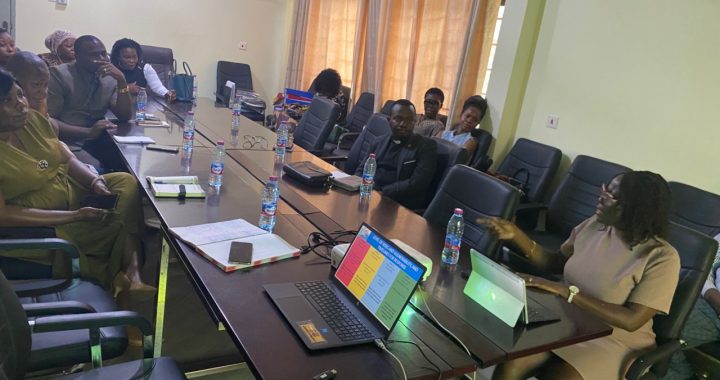
The Department of Social Welfare and Community Development organized a one-day training session on Intersectoral Standard Operating Procedures (SOPs) for child protection stakeholders. The training, held on [insert date], brought together key actors including the Domestic Violence and Victim Support Unit (DOVVSU), Commission on Human Rights and Administrative Justice (CHRAJ), National Commission for Civic Education (NCCE), Girl Child Officers, Guidance and Counseling Officers, Planning Officers, religious leaders, and traditional authorities. The objective was to enhance coordination and clarify roles in child protection responses.
Background and Rationale
The training was necessitated by observed gaps in inter-agency coordination and the need for a unified approach to child protection cases. Stakeholders often operated in silos, leading to duplication of efforts, delays in response, and sometimes, revictimization of children. The introduction of Intersectoral SOPs aims to address these challenges by providing a clear framework for collaboration, referral, and information sharing among all actors involved in child protection.
Training Methodology
The training employed a participatory and learner-centered approach to ensure active engagement and practical understanding. Methods used included:
· Expert Presentations: Delivered by the Regional Director and other resource persons, covering key concepts in child protection and the SOP framework.
· Plenary Discussions: Allowed participants to ask questions, share experiences, and clarify doubts.
· Group Work: Stakeholders were divided into mixed groups to analyze case studies and propose interventions based on the SOPs.
· Role-Playing Exercises: Simulated real-life scenarios helped participants practice their roles and practice inter-agency collaboration.
Training Highlights
· Facilitation: The session was facilitated by the Regional Director of Social Welfare and Community Development, who provided expert guidance on national child protection frameworks and the importance of standardized procedures.
· Case Management: Participants were trained on the case management cycle, including intake, assessment, case planning, referral, and follow-up, with emphasis on the role each stakeholder plays at every stage.
· Role-Playing Exercises: Practical role-plays were used to simulate real-life child protection scenarios (e.g., child abuse reporting, family tracing, and mediation), allowing stakeholders to practice collaboration and decision-making in a safe learning environment.
· Clarification of Roles: The training clarified the mandates of each institution and how they can work together to avoid duplication and ensure timely intervention. A matrix of roles and responsibilities was discussed and adopted by participants.
Key Outcomes
· Improved Collaboration: Stakeholders committed to strengthening inter-agency collaboration through regular communication, quarterly review meetings, and the use of standardized referral forms.
· Application of SOPs: Participants pledged to apply the SOPs in their respective communities and institutions to ensure a coordinated and effective response to child protection issues.
· Action Plan: A draft action plan was developed, outlining next steps, including community sensitization, capacity building for frontline staff, and monitoring of SOP implementation.
Challenges Encountered
· Time constraints limited in-depth discussion of some complex case scenarios.
· Some participants noted the need for simplified versions of the SOPs in local languages for community-level actors.
· Inconsistent internet connectivity affected access to online resources during the training.
Recommendations
1. Refresher Trainings: Organize periodic refresher trainings to reinforce learning and address emerging issues.
2. Translation of SOPs: Translate key sections of the SOPs into major local languages for wider accessibility.
3. Monitoring and Support: Constitute a joint monitoring team to track the implementation of the SOPs and provide on-site support to stakeholders.
4. Resource Allocation: Advocate for resources to support stakeholder activities, including transportation for home visits and follow-ups.
5. Feedback Mechanism: Establish a feedback mechanism for stakeholders to report challenges and share success stories in SOP implementation.
Conclusion
The training on Intersectoral Standard Operating Procedures marked a significant milestone in strengthening the child protection system in the district. By fostering a shared understanding of roles, responsibilities, and procedures, stakeholders are now better positioned to work collaboratively to safeguard the rights and well-being of children. Continued commitment, coordination, and capacity building will be essential to translating the training outcomes into lasting impact.
Acknowledgement
The Department of Social Welfare and Community Development extends its sincere gratitude to the Regional Director for facilitating the training, and to all stakeholders for their active participation and dedication to child protection.
